| ||||||

Friday, 29 March 2019


Wednesday, 20 March 2019
Addition of the influential screenplay

As part of your evaluation, you are to discuss other CINEMATIC INFLUENCES that have informed the production. You should also find a screenplay and show how an element of the writing has been an influence on your work. Use screenshots of your screenplay and another example side by side to illustrate your points.
A screenwriting learner may reference a script influence like so:
The screenplay for La La Land had a big influence on my film. Damien Chazelle's introduction to Mia garners instant audience empathy in his description: ' Mia, 27. Six years of 'no' in L.A. have toughened her, but she's still a dreamer. Fast, fiery, full of energy.'. It was my intention that the way I introduced Jill to the narrative would also create a sympathetic connection with the audience. I used the codes of a typical 'everywoman' by describing her as a 'hen-pecked single mother of two who, in her spare time, lived on a diet of boxsets and loosely based Bridget Jones fantasies'.
Thursday, 14 March 2019
Work Set for Mon 18 March
Here is a typical Documentary question:
Apply one filmmaker's theory of documentary film you have studied to your chosen documentary. How far does this increase your understanding of the film? [20]
You will choose either Peter Watkins or Kim Longinotto and apply their ideas to Clio Barnard's The Arbor.
Here's what you could include:
Apply one filmmaker's theory of documentary film you have studied to your chosen documentary. How far does this increase your understanding of the film? [20]
You will choose either Peter Watkins or Kim Longinotto and apply their ideas to Clio Barnard's The Arbor.
Here's what you could include:
- an understanding of the chosen filmmaker's theory demonstrated through highlighting its key features
- a discussion of how the chosen theory relates to the relevant documentary and its approach to documentary making or filmmaking in general.
- a discussion of the techniques used in the documentary to convey representations of the real in terms of the claims of the filmmaker's theory
- a conclusion that the application of the filmmaker's theory is likely to have increased understanding of the chosen documentary.
- Band 5 responses may claim that documentaries can only convey an ideological representation of their subject which may be highlighted through the application of a theory.
Task:
In order to answer this question properly, read up and take notes on ONE of the doc filmmaker theorists. So either Peter Watkins or Kim Longinotto. And brush up on Clio Barnard's approach.
Therefore read and take notes on the following:
Monday, 4 March 2019
Clio Barnard - Theories

Clio Barnard - Theories
- Revisiting and reflection on the representation of a place and time.
- Fascinated by marginalised groups
- Presentation devoid of sentimentality and emotion
- Forms strong bonds with subject
- Views her role to be unobtrusive and non-judgemental
- Explores the notion that the audience is being manipulated through film
- Uses a mix of professional actors and non-actors
- Concerned with the relationship between fiction film language and documentary
- Interested int he flexibility of memories
- Wants to close the gap between reality and representation
- Highlights the struggles of social deprivation, aggressive racism, and powerful addictions
Friday, 1 March 2019
Tuesday, 26 February 2019
Wednesday, 13 February 2019
Key dates
Monday 3 June PM
Component 1 – Varieties of film and filmmaking
Section A: Hollywood 1930 – 1990 (comparative study) 40
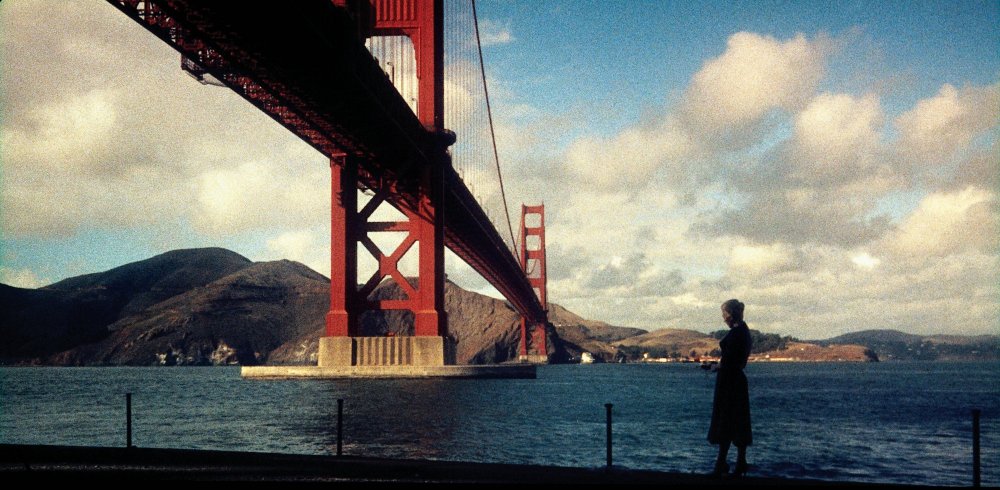
Vertigo / Bladerunner
Section B: American film since 2005 (two film study) 40
No Country For Old Men / Captain Fantastic
Section C: British film since 1995 (two film study) 40
Trainspotting / This Is England
Friday 7 June PM
Component 2 – Global filmmaking perspectives
Section A: Global Film (two film study) 40
City Of God / Victoria
Section B: Documentary Film 20
The Arbor
Section C: Film Movements – Silent Cinema 20
Buster Keaton Shorts - The High Sign, One Week, Cops, The Scarecrow
Section D: Film Movements – Experimental Film (1960 – 2000) 20
Vivre Sa Vie
15 Aug, results day.
Vivre Sa Vie
15 Aug, results day.
Monday, 11 February 2019

Friday, 8 February 2019


Wednesday, 23 January 2019
New! Short films to study and be influenced by :)
I am aware that The Swimmer and The Grandmother might not have been choices of films that you may have made. Therefore, I am encouraging you to watch your own selection from the list below. Please ensure that you have 80mins+ of running time under your belt.
I would imagine that most of you will leave in:
- About a Girl (Percival, UK, 2001) 09'
- The Gunfighter (Kissack, US, 2014) 09'.
- Curfew (Christensen, US, 2012) 19'
=37 mins. 43 remainig!
Choosing the shorts
It is important to select films that may have an impact or influence over the choices in the production options. It may be sensible to group selections of films from the menu of short films, perhaps categorising them by style, or theme, or structure. It may be worth looking at these groups to research based on the genre you wish to work in.
Here is one such set of groupings based on genre. (Note, you may need to study two groups in order to meet the 80 mins requirement)
Surreal or alternative in structure
Meshes in the Afternoon (Deren, US, 1946) 14’
La Jetée (Marker, France, 1962) 28’
La Ricotta (Pasolini, Italy, 1963) 34’
Stylised or documentary style
A Girl’s Own Story (Campion, Australia, 1987) 26’
Elephant (Clarke, UK, 1989) 39’
About a Girl (Percival, UK, 2001) 09'
Animation
The Grandmother (Lynch, US, 1970) 34’
The Wrong Trousers (Park, UK, 1993) 30'
When the Day Breaks (Forbis/Tilby, Canada, 1999) 09'
Social realist (ish)
Wasp (Arnold, UK, 2003) 24'
Connect (Abrahams, UK, 2010) 05'
Films with a ‘twist’
High Maintenance (Van, Germany, 2006) 09'
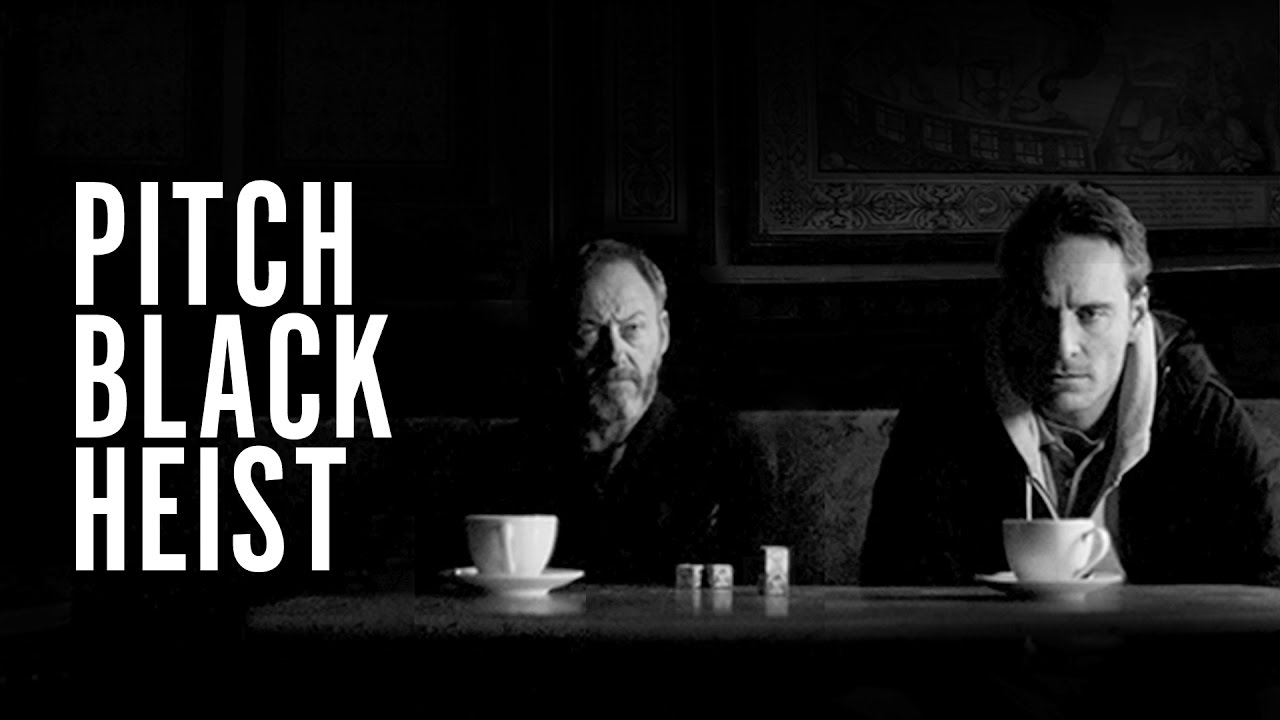
Pitch Black Heist (Maclean, UK, 2012) 13’
Curfew (Christensen, US, 2012) 19'
The Gunfighter (Kissack, US, 2014) 09'.
Interesting/experimental narrative structure
Night Fishing (Park, South Korea, 2011) 33’
Swimmer (Ramsay, UK, 2012) 18’
Stutterer (Cleary, UK, 2015) 12'.
It should be noted that there is no ‘correct’ way of grouping the films, but rather it is about finding a method that could inform the production and be easy to reference in the Evaluative Analysis. It may be useful to group them around the four concept briefs from the Specification.
Next become familiar with the films. Look at them for the way their narrative structure works. Look at them for particular stylistic features. Look at them for particular instances of use of micro features. Most importantly look at them for elements that can inform and influence a production. Note these down for use in the film or screenplay production and for later use in the Evaluative Analysis.
You are encouraged to use this research to create a film or screenplay where the identified elements are to the fore (remember the purpose of creating this is to meet the assessment criteria). They can be referenced directly (an ‘homage’, use of similar narrative structure, similar use of micro features, etc.), or more obliquely – they will be identified and unpicked in the Evaluative Analysis.
Friday, 18 January 2019

Evaluative Analysis Essay - Independent learning
Deadline Monday :)
Principal's Guidance HERE
Independent study task: Complete the introduction of your Evaluative Analysis Essay
Structuring the Evaluative Analysis
The Evaluative Analysis must include the following elements (and indeed this offers a reasonable template for structuring it with approximately 600 words dedicated to each, taking into account the introduction).
Introduction
The evaluations should include an introduction, like any other long-form essay. This should include:
- the brief chosen (see below)
- a short synopsis of the film
- the medium chosen (film/screenplay) and
- some brief aims – it is IMPOSSIBLE to evaluate the success of the production WITHOUT any measurable aims.
Sample aims may include:
Intended audience response:
- ‘To create empathy with my main character’
- ’To have the audience on the edge of their seat’
Genre/Style goals:
- ‘To create a highly visual Film Noir’
- ‘To create an aesthetic similar to my research film X’
- ‘To subvert the conventions of gender within the Sci-Fi by developing a strong female character within my script’
Feel free to continue using the guidance, linked above to structure your response.
Your screenplay must include ONE of the following briefs:
- a narrative twist
- a narrative which begins with an enigma
- a narrative which establishes and develops a single character
- a narrative which portrays a conflict between two central characters.
Tuesday, 8 January 2019
Wednesday, 12 December 2018
Narrative Notes

See your selected part below. You will be expected to take short notes, but deliver fully to the class with the help of your tutor on Friday.
Jacob 80 - 82
Antonia 82 - 85
Leighton 85 - 87
Evie 87 - 91
Finn 91 - 97
Ethan 97 - 102

Friday, 9 November 2018
Recap Narrative

Split a page in half, top to bottom. Using the list of prompts below, we are going to revisit a mainstream American film to study the narrative. Then we will look closely at our experimental choice and compare.
Notes on Narrative
The concept of narrative is largely concerned with the story of a film, although several distinctions need to be made between narrative, story, and plot. Narrative is largely the practice or art of telling stories: a representation of a particular situation or process in such a way as to reflect or conform to an overarching set of aims or values. The storyline is the plot of a novel, play, film, or other narrative form and plot is the main events of a play, novel, film, or similar work, devised and presented by the writer as an interrelated sequence. Therefore, selecting the order of events into a story is a narrative. The study of narrative is one way of examining the story of a film and exploring how it is structured, ordered and why this has been done. Narrative also asks the viewer to consider from whose viewpoint we are experiencing the story and whether this has an effect on what we see, hear and experience. For example, does the way in which the narrative is presented withhold information from us or only present things from the perspective of a character? Tightly aligned with editing, narrative is a complex and highly ambiguous aspect of film studies.
The study of narrative also incorporates genre Genre can be defined as a style or category of film whereby, developed over time, socially- agreed tropes and conventions help to depict categories. Genre is eminently fluid and often a film may straddle the distinction of many genres. In exploring and analysing genre, a useful starting point is to typically identify key characteristics of genres. These are more commonly referred to as the 'Repertoire of Elements'
A study of narrative looks at, for example:
• Representation of time
• Use of narration/voiceover
• How dialogue propels the narrative
• Creation of drama or action
• Character development – heroes and villains, ambiguity
• Character alignment and identification
• How narratives present an ideological viewpoint
• Enigma codes
• Generic narratives and formulas
• Binary Oppositions
Questions on Narrative
* Who is the film about?
* When does it take place?
* Where does it take place?
* What happens? And how does it happen?
• How is time manipulated in the film?
• Is the plot linear or nonlinear?
• Are there flashbacks or flash-forwards?
• Is the plot episodic? Is it circular?
• Where and when does the film start?
• Where and when does it end?
• Do various storylines interweave at various plot points?
• Do characters evolve in an arc?
• Does the film follow the traditional three-act structure?
• Are their ellipses?
• How do the mise en scene, cinematography, editing, and sound contribute to the development of the narrative?
• Is there repetition or a framing sequence, perhaps with an actual narrator?
• Are their clear conflicts built into the film
• Is the film ideological in terms of its narrative construction?
• Is there a twist?
• Is their an enigma in the setup - a problem to be resolved?
• Are characters in conflict?
• How is the story told through narrative techniques (flashbacks/forwards, pov,
chronology, enigma, voiceover)
• What character types are created?
• Who is the audience encouraged to identify with/dislike? What are the ideological implications of this?
• Is the film narrative linear or nonlinear/chronological/multistrand?
• Does the text follow a conventional equilibrium/disruption or re-equilibrium structure or does it do something more unconventional?
• How are drama and tension created?
• Does the film’s genre shape its narrative?
• Film poetics: What is the shot by shot relationship? How have the shots been edited together and what is the impact of this?
Wednesday, 7 November 2018
Recap Auteurs and Auteur Theory

Class task:
Look back at your notes on auteur from your Hollywood comparison study. Evidence the following questions then feed your responses back to the whole class:
• Define auteur
• To what extent is Hollywood studio filmmaking more of a collaboration?
• Can you think of auteurs who work in Hollywood yet still create personal films and have a distinct auteur
trademark?
• Do you think that working outside of a large studio and producing more experimental films may give a director more freedom?
Independent Learning task - Experimental Auteurs.
Produce a report on your director/maker that investigates:
- What are the director's key films
- What are the director's trademarks
- What makes the director 'experimental?
- What are the director's key motivations when making experimental film
- Who does the director collaborate with and what do they contribute
- Show the group an absolutely typical scene from your director and talk about why this is so quintessentially them.
Leighton - David Lynch
Ethan - Vera Chytilova
Finn - Stan Brakhage
Antonia - Quentin Tarantino
Evie - Lem Lye
Jacob - Jean Luc Goddard
Deadline Monday.
Have fun.
Thursday, 18 October 2018

Subscribe to:
Posts (Atom)